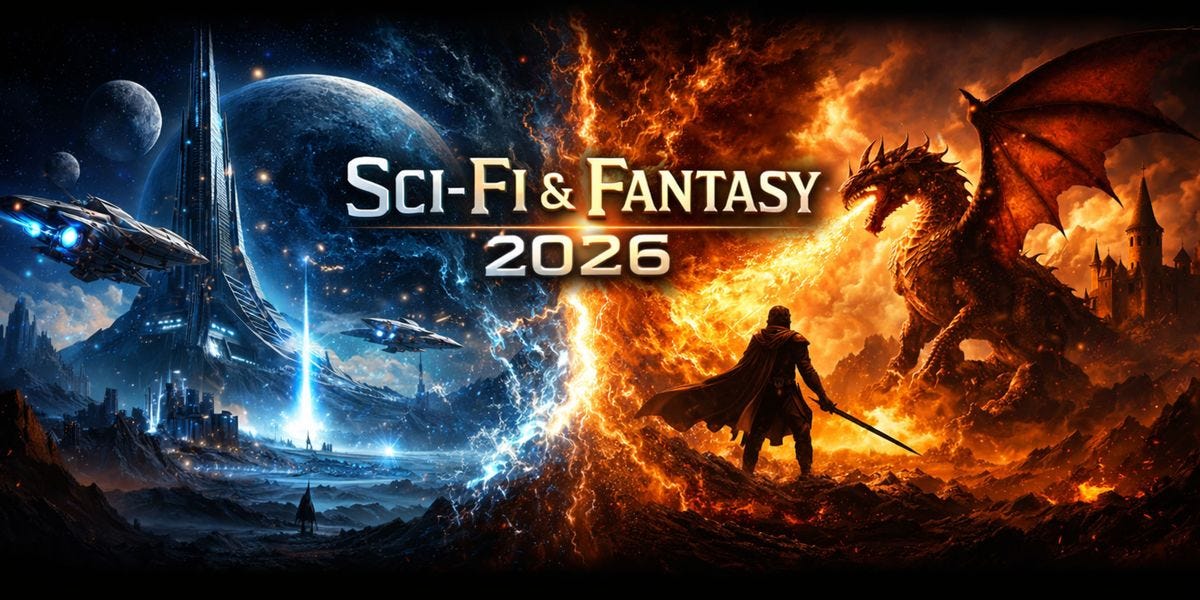
My novelette, An Illicit Mercy, is part of a promotion this year: Sci-Fi & Fantasy 2026.
Nearly 50 books, short stories, samples, and previews, available at no cost.
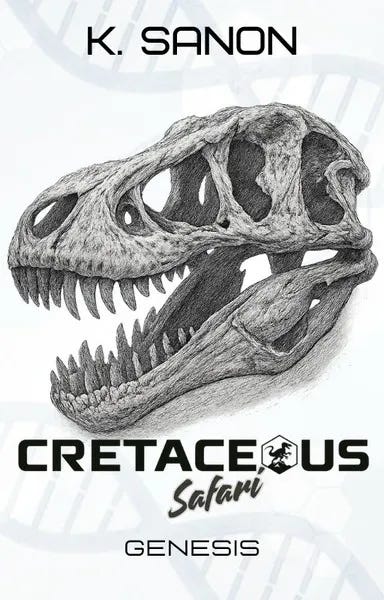
Paradise has a price. And on Kaeero Island, the currency is blood.
Get your FREE copy of Cretaceous Safari: Genesis by K. Sanon!
Ethan and Mira Granger are offered a once-in-a-lifetime opportunity: a high-paying job on a remote, uncharted island in the South Pacific. After years of financial struggle and personal tragedy, it seems like the fresh start they’ve been waiting for. But from the moment they arrive, the island’s breathtaking beauty feels almost too perfect, hiding a darkness that can’t be contained by fences or gates.
Obsidian Corp, the company behind the project, has promised innovation and safety, but their vision of paradise is not built for the people who work there. As the Granger family settles into the island, they begin to uncover secrets that challenge everything they thought they knew about life, nature, and control. In this world, survival isn’t guaranteed, and the boundaries of the human hierarchy are pushed to their limits.
When the jungle wakes and the rules change, the Granger family must navigate a world where every step could be their last. In the Cretaceous Safari, humans are no longer at the top of the food chain.
No cages. No limits. No escape.
NOTE: This is a preview. It includes the first 7 chapters.
by Brian Scott Pauls
Below is an interview with Kate Ristau, president of the Science Fiction & Fantasy Writers Association, which I recorded over a year ago. We spoke just before I lost my job and suspended this newsletter while I re-invented my professional career. I’m so glad to finally bring this discussion to you, because Kate has such great insights into the speculative fiction writing community.
We conducted this interview last May, about a month before the Nebula Conference in Kansas City. While that part of the interview is out-of-date, Kate still has helpful observations about what makes for a good conference location.
I hope you enjoy our conversation.
Also, please remember Cloudessy, my consulting business providing fractional Chief Technology Officer services, is now a sponsor of this newsletter. If you or someone you know needs professional tech guidance for their author, coaching, or independent publishing business, check out the ad at the end of this post. Thank you!
Recorded May 6, 2025. This transcript has been lightly edited for clarity and length.
Brian Pauls: Welcome, everyone, to the Cosmic Codex interview, where I talk to various people working in the science fiction industry. Our guest today is Kate Ristau, the president of the Science Fiction & Fantasy Writers Association. Kate, welcome.
Kate Ristau: Hello! Great to talk with you today.
Brian Pauls: It’s great to have you — I’ve really been looking forward to this interview. To start out: what is the Science Fiction & Fantasy Writers Association?
Kate Ristau: The Science Fiction & Fantasy Writers Association has been around since 1965. It’s an organization that helps writers on their journey as they’re publishing, as they’re creating, as they’re bringing their work out into the world. But we also support and advocate for and defend the speculative fiction genre. So you’ll see us making moves toward supporting good contracts, or showing writers the best way to get their work out into the industry. It’s definitely an organization that was built on membership and focused on the members, and is now moving out and supporting the larger science fiction and fantasy genre community.
Brian Pauls: So all the members are writers, correct?
Kate Ristau: They’re all writers and creators. It was interesting — when we first started, before we had this big new media shift that’s happened over the last ten to twenty years, we started out with short stories and novels. Then we started adding in novellas and novelettes and all these different forms of story. And now you’re starting to see movies, graphic novels, comics. We’ll also have poetry eligible for the Nebula Awards in this upcoming year.
Brian Pauls: Very good. You focus on science fiction and fantasy — is horror included?
Kate Ristau: Horror is included under that speculative fiction genre umbrella. One of the works nominated this year under Novel is John Wiswell’s new book, Someone You Can Build a Nest In, and that one definitely straddles the line between horror and speculative fiction, sci-fi/fantasy. There was a discussion for a while about what term we should use — sci-fi/fantasy or speculative fiction — and I think speculative fiction has a little bit of a bigger umbrella. But we definitely, on the SFWA side, bring in sci-fi/fantasy writers and horror writers, and we also bring in the romantasy writers who are straddling that line between romance and sci-fi/fantasy as well.
Brian Pauls: I think Robert A. Heinlein once wrote that “science fiction” was a terrible name, but we’re stuck with it.
Kate Ristau: That is very true. And we’re constantly abbreviating things and then unabbreviating them. So we have SFF, and then we go to SFFA…
Brian Pauls: Things change and stay the same. So you’re a member, obviously, and the president — which means that you’re a writer. Do you lean more in the direction of one of those genres than the others?
Kate Ristau: That’s a great question. I definitely lean personally more toward fantasy in my writing and in my work. My background is that I’m a folklorist, so I’ve studied mythology and stories and the reasons why different stories resonate over time, throughout history and across different cultures.
The way I came into SFWA was actually around 2020. The writing organization I work with — the transition onto Zoom and into online land during the pandemic was actually pretty easy for us, just because we have volunteers that are all over the place, so we had been using Zoom very actively and regularly. So I reached out to SFWA, just asking if SFWA needed some help with shifting into online platforms. That’s how I got connected into the Nebula Awards and helped support them, and then ultimately produced the Nebula Awards for the last few years.
I’ve been around the SFWA community for a while, and I personally have always loved volunteering with the Nebulas and basically celebrating all those really great, amazing works. Behind the scenes, we actually read all of them — we read all the novellas and short stories, and we try to play the games — so we really get immersed in that year’s finalists and the works that are at the forefront of the genre that year.
Brian Pauls: Why don’t you tell our audience what the Nebula Awards are, and maybe how they differ from other awards in the science fiction, fantasy, and horror fields?
Kate Ristau: That’s a great question, because there are a couple of really important awards, and a lot of them get announced right around the same time. If we look for a second at the Hugos and the Locus Awards and the Nebula Awards — and then there are several others, obviously — the Hugos are always voted on by the fans and the larger sci-fi community. So you can have people who are writing sci-fi/fantasy, and you’ll also have fans of sci-fi/fantasy. It’s interesting to look at those lists and see how they compare. Locus is also open to public voting. So if you see a piece that makes it across Locus and into the Hugos and into the Nebulas, that’s something that is standing up really strong, because it can be both in the creative community and in the fan community.
For the Nebulas specifically, it’s voted on by the SFWA members. So that’s people who are working in the science fiction and fantasy writing community and creative community. There’s a threshold for when you get to become a SFWA member, and I always see it as a little checkmark on your writing career. But over the last several years it’s become more and more accessible, because the way we publish and the way we work in the industry has dramatically changed — new media and the internet, and where we’re publishing and where we’re creating all those stories, and in games and poetry.
In terms of the Nebulas themselves, we’ve been running them since 1965, so this is our diamond anniversary year. It’s very, very cool to go back and see what was being nominated in those first Nebulas compared to what’s being nominated now. And I personally think, having read a lot of those Nebula stories and played a lot of those games — I played way too much Baldur’s Gate, not going to talk about it — the pieces that are nominated for the Nebulas, over and over again those works are pushing at the edges of genre. They’re pushing at things that we care about and are thinking about and are actively challenging at the time, as writers and creators. Some of them just make you feel uncomfortable, because there’s something that’s already hard for you to deal with and that you’re trying to imagine and recreate and rethink. That’s the thing that I love about the Nebulas.
Brian Pauls: I’d have to go back and count, but I think Harlan Ellison won a lot more Nebulas than he did Hugos.
Kate Ristau: Yeah, and it’s interesting to see who was winning the Nebulas, who was winning the Hugos, in what years, and what was being nominated. We were just talking the other day about Dune — Frank Herbert didn’t win the Grand Master Award, and that’s the big award recognizing your legacy and the work you did throughout your career. Sometimes those just get missed in terms of who’s being nominated. And then there are other times where something matters to us so much later. I feel like Ursula K. Le Guin is an example of someone whose legacy just keeps going on and on, and we keep looking at her work in different ways. So I love seeing who was nominated across all those different awards — and there are things like the Lodestar Award as well — and how those all play into the industry as a whole.
Brian Pauls: And Samuel R. Delany — I don’t think he ever won a Hugo for a novel, but he won at least two Nebula Awards for novels. You wonder, for the first really prominent Black science fiction author, what sort of role that played. But definitely the writers in SFWA recognized in Delany something that they, as fellow writers, really respected. And I think it probably took the wider audience more time to catch up with that, because at the time Delany was winning his Nebulas, the stuff that was winning Hugos was not really anything like what he was writing.
Kate Ristau: And I think we see that even with Octavia Butler as well. A few years ago we launched the Infinity Award as a way of recognizing creators whose work hadn’t been acknowledged in the past — actually giving them the credit that they earned or deserved but didn’t get at the time. Octavia was a great example of that: somebody who wasn’t a Grand Master but made such a big impact on the industry.
Brian Pauls: For sure. And she’s getting recognized now in other media — there was recently a Kindred television series. It’s better late than never, but it’s great that her vision is getting out there to the science fiction community, and now beyond the science fiction community.
So, the Nebula Awards. I’ve heard people say that they consider the Hugo to be the Oscar of science fiction, but in terms of the way the awards are presented, it seems like the Hugo and the Locus Award are really more people’s choice awards. You have to be a fan who cares enough to go through the process of voting, and then the winner is based on basically a popularity contest among the fans who cared enough to vote. The Nebulas are much more like the Oscar in their methodology, in that you have to be part of the association of creators in order to vote. So how do you think that has led to different choices for the Nebulas than for some other awards? You can answer that either historically or in terms of how you think it plays out today — whatever makes the most sense.
Kate Ristau: That’s a great question. I went to Worldcon in Scotland this last year, and it was so fun sitting in the audience — because as someone who’s been running the Nebula Awards for the last few years, you have those things in your head about how you want to run an awards ceremony. But also I have my people that I’m personally rooting for, and then the people that I’ve met and come to know and whose work I’ve read because of going through the Nebula process with them.
So seeing some of those people also hit the stage at the Hugos — like I was saying, I think it’s a really big recognition if you can get onto several of those ballots, because you’re crossing across all those different areas. And we do tend to see a lot more groundbreaking work happening on the Nebula side — but also a lot of groundbreaking social work, and pushing the boundaries of our expectations of what sci-fi/fantasy should be. I think we see a lot of that in the Nebulas. And then there will be those books that just destroy across every single award category, and you know them when you read them.
One of my favorite things is seeing some of those people nominated across those awards — and, having read several of those books, being at Worldcon watching people take the stage and going, “We saw them at the Nebulas, and we’re excited to celebrate them that way too.”
Brian Pauls: Some community-minded individual has built a Goodreads list of the triple crown winners — the Hugo, the Locus, and the Nebula — and I reference that list a lot. I try to be very selective about what I buy in paper these days, just because you get to be old enough and you’ve moved too many boxes of books from house to house to house. But one of the things I do have my sights set on is collecting all of the ones that have won all three, because I do agree that that speaks to a level of quality and cuts across the popularity aspect of it. Both the writers and a couple of groups of fans all thought this was a great novel. Doesn’t guarantee I’m going to like it, but there’s probably a pretty good chance that I’ll at least see something worthwhile in it.
Kate Ristau: Yeah — there’s something that drew everybody in and had them thinking, or wanting that work to get some attention.
Brian Pauls: So the Nebulas — it’s not just an award ceremony, although there is that. It’s also a conference. Can you tell us what people who participate in the Nebula Conference would experience, and the different ways in which science fiction, fantasy, and horror readers can participate?
Kate Ristau: I come to this as the president of the Science Fiction & Fantasy Writers Association, but also, like I was saying, I’m the executive director of a writing nonprofit myself. So when I look at conferences, I’m often making recommendations of conferences to writers about what would be a good choice for them — where are you at in your path, and what would help you build your career or make the connections you need?
I think the Nebulas in particular — it’s an entire professional development conference weekend. From the start on Thursday to going home on Sunday, there are workshops and panels, and there are things that are very industry-focused. Maybe you’ve already published your first short story, or you’ve written several novels — there’s a place for everyone there. But it’s also a place where if you’re brand new, you can still step in and learn a lot. That content is really rich and deep, and it’s meant to challenge and further your career. So it’s very intentionally focused on professional workshops.
This year in particular, we’ve made a switch to having some of those as workshops as well as panels. In the panels, we get to see industry professionals alongside finalists and other authors — and even past presidents. So we have all of these people coming in with a lot of knowledge about how the industry has worked and how they see it working into the future. And then workshops that are focused on in-depth support for your writing career, or support for where you’re at in the publishing industry.
That’s what makes the Nebulas shine a little differently. I go to lots of sci-fi/fantasy conventions, and I personally also go to a lot of writer conferences, since I’m in that zone as well. I think that’s the difference with the Nebula Conference that happens around the Nebula Awards: you can get that extra help to build out your writing career and to build out your creative career.
Brian Pauls: Where is the conference taking place in Kansas City?
Kate Ristau: It is in Kansas City at the — oh, man, this is the thing that I should have off the top of my head. Hold on. I’ve literally been there. The Marriott Country Club Plaza.
Brian Pauls: Yes.
Kate Ristau: That’s the funny part. I got to go tour the Marriott Country Club Plaza and go around Kansas City — that was late February. It’s great. The hotel has this feel where when you first come in it’s a little bit smaller, and then as you go upstairs it just expands out into lots of ballrooms and workshop rooms and panel rooms and places to gather and network and chat and talk.
Brian Pauls: Cosmic Codex readers, viewers, and listeners will know that I’m from Kansas City, and the Marriott is right on the Country Club Plaza. So if you need a break, the Plaza is a great place to go grab a snack or just walk around and window shop.
Kate Ristau: So many restaurants and shops!
Brian Pauls: I thought that was a great choice, because when I saw it was going to be in Kansas City, I was sure it was going to be at the downtown Marriott. But the Plaza is such a more welcoming place for pedestrians. That was a really good choice.
Kate Ristau: That was the thing I loved about the Country Club Plaza in particular. We looked at a lot of different hotels, and going in — it has this inviting atmosphere. There’s a little coffee shop where people can hang out and talk. There’s a bar. But then as you go upstairs, that’s where the majority of the conference is going to take place. So you know that if you see anyone on that second floor, they’re pretty much just there with the Nebula Awards, with the conference that weekend.
Brian Pauls: They’re one of your people.
Kate Ristau: That is my favorite part about going to conventions and conferences. You have your lanyard, and you can look at someone and know that they’re in the community that you are, and you can have those conversations.
Brian Pauls: Do you have a personal favorite work that has won the Nebula Award?
Kate Ristau: Oh, man, this is so hard! I am terrible at identifying particular books. I’m actually looking around to see what I have. You talked about having all the bookshelves and books and things — my living room is downstairs, and it’s wall-to-wall books.
I’m going to throw some curveballs here. I also read middle grade and young adult fantasy, so a lot of my downstairs shelves — I have a middle grade shelf, and then a young adult shelf, and then a whole bunch of sci-fi/fantasy genre. And maybe alphabetized. I’m kind of that person. But then I also read a lot on Libby, the app you can get from the library, and I listen to a lot of audiobooks.
So I want to say that personally, over the last few years in terms of nominees, I have loved what Clarkesworld has been doing in general. I’m just going to put that out there, because I’ve listened to a lot of the short stories coming through there, and those have been really great, and they’ve been nominated over and over again.
I loved Elatsoe by Darcie Little Badger. That was a very unexpected book for me. I read it and didn’t really know what I was getting myself into, and she kind of breaks narrative structures and tries a whole bunch of different things. So reading that one was a surprise for me.
Brian Pauls: Very good. Thank you for handling my curveball.
Kate Ristau: Definitely. I was thinking—
Brian Pauls: I can tell.
Kate Ristau: —I can talk about books for a long time.
Brian Pauls: You brought up middle grade. I think my favorite award that you give out at the Nebulas is the Andre Norton Award for Middle Grade and Young Adult Fiction. I’m from the generation where, when I grew up, the books that were in the public library and in the junior high library were a lot of Andre Norton books. And I’m ashamed — but not alone — to admit that I did not realize Andre Norton was a woman until I got into junior high, and one of my nerdy know-it-all friends said — I’d said, “I like this book by Andre Norton, he’s such a great writer” — “You know she’s a woman, right?” And I was like: mind blown.
Of course, now I understand the social issues that went into that. It’s wonderful that she reached those Grand Master heights as an author; it’s sad that she had to kind of disguise her identity in order to do it. But she was really my introduction to science fiction, with The Zero Stone and Uncharted Stars, and that in turn led me to the Heinlein juveniles, and then to more adult books.
So I love the fact that you have a collection of young adult books in your library. I’ve started one, because I have a six-year-old. I cannot guarantee that she will become a science fiction fan, but I’m going to do everything I possibly can until she says, “Dad, read me something else.” I’ve been finding new middle grade fiction for her, and it’s been a wonderful journey to go back and be like, “Oh, I’m going to be able to give her some guidance now on this.”
So tell me, before we wrap up: what is it about middle grade fiction that you really enjoy?
Kate Ristau: I love that you asked that, because one hundred percent, middle grade — there’s some big hope and possibility in middle grade that I don’t think you see anywhere else. I always go back to, for example, the book Cog by Greg van Eekhout. One of the things Greg does in Cog is — it’s just funny and weird, and there are robots and all of these different things that happen. I think you can do a lot, in a very dorky way I’m going to say, with narrative structures and with expectations, because kids in middle grade — there’s not that focus on “here’s what you need to have in front of you.” There’s not an expectation of what a story has to look like. So you’ll see authors challenging identity and challenging narrative structure and challenging our expectations of what a story should be. But then they also bring things together in these big, beautiful ways.
There are so many middle grade books. And even Susan Cooper, who received the Grand Master Award last year — she’s somebody who, when she was nominated, everyone was just… because it’s somebody you remember, who impacted you in this incredible way when you read their work. To see her take the stage and talk about her career and imagine the possibilities was amazing. That’s the thing that I love.
Brian Pauls: This is the future of our fan base, right? We have to produce books that are going to interest readers as young readers, if we want them to grow up to be adult readers who still want to read science fiction and fantasy and horror.
Kate Ristau: Yeah. And next time we chat, I’ll be downstairs, so I’ll have all the books that I can reference and I’ll just start pulling them off the shelves.
Brian Pauls: Sounds good. And that does bring us to the end of our time — we actually ran a little bit over, and I apologize for that, but I was having too good a time asking you questions. Thank you so much for taking the opportunity to come on and talk to us about the Nebulas. I hope to see you there in June.
Kate Ristau: In Kansas City. Have a good one!
Brian Pauls: All right. Thank you.
Kate Ristau: Thank you.
Thoughts about this interview or the 2025 Nebula Awards in Kansas City? Share them below!
Artificial intelligence tools performed multiple tasks in the creation and publication of this article.
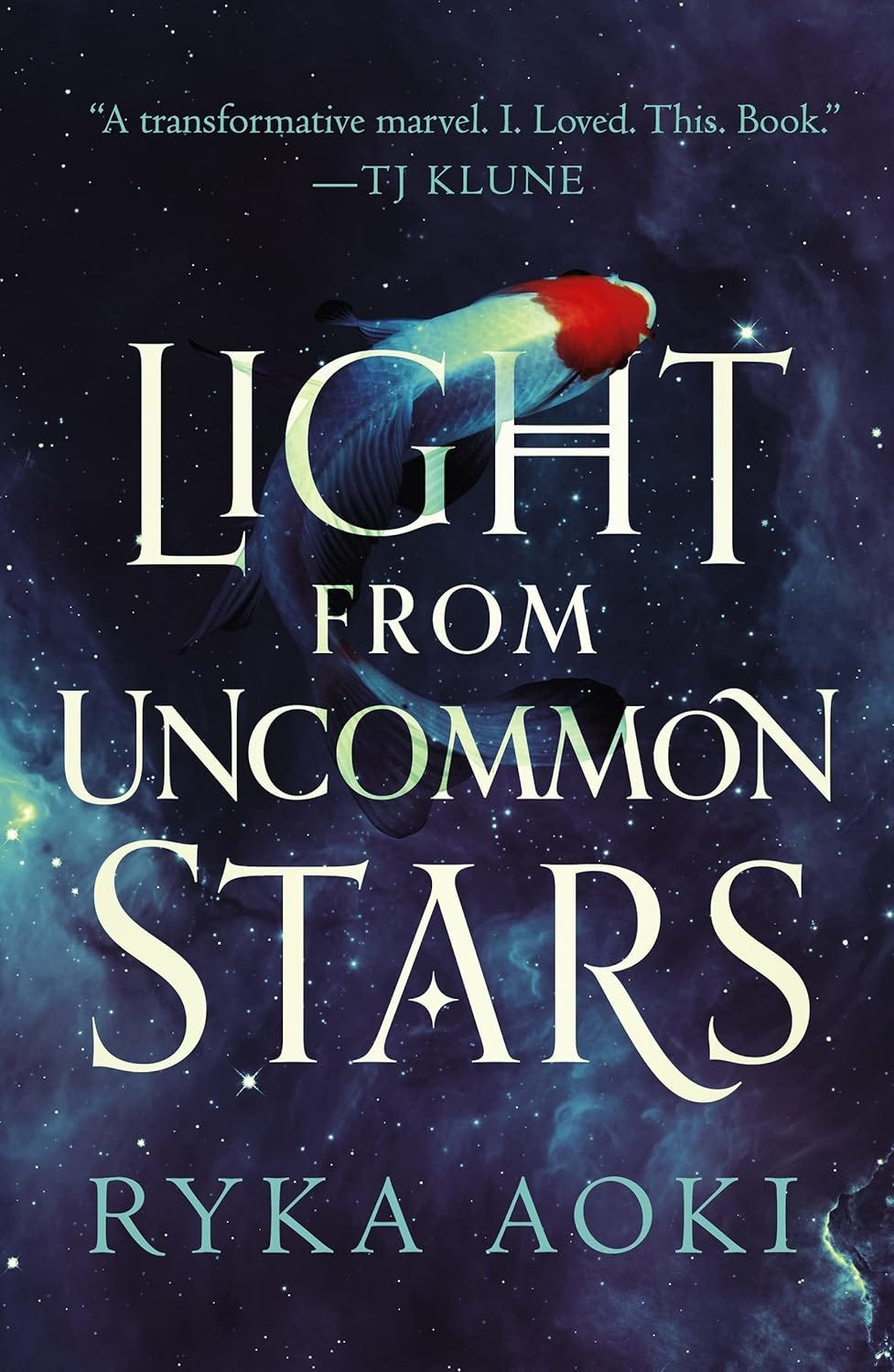
This month, I’ve finished reading Ryka Aoki’s Otherwise Award-winning novel Light from Uncommon Stars, which I started over a year ago. I’ve shared my thoughts on Club Codex, where any Cosmic Codex subscriber can follow along, comment, or ask questions.
From one of this week’s posts:
“When Aoki writes about playing the violin, it makes me wish I was musical enough to experience what she has evidently experienced. This makes sense, as she is herself a composer. But she is also a poet, and sometimes it is the words themselves, not just the thoughts behind them, that resonate. For example:
’One does not play memories of music; one plays music itself. And lifetimes, from beginning to end, are as sheets of music, ready to be played.’”
Click below to participate:
Next month, I’ll be reading and commenting on Arboreality, by Rebecca Campbell, winner of the 2023 Ursula K. Le Guin Prize for Fiction.

Authors: Turn Tech Chaos Into Calm, Clear Systems
Your email platform doesn’t talk to your course host. Your CRM doesn’t connect to your payment processor. And somewhere in that gap, you’re losing sales you’ll never be able to trace.
Tech chaos is one of the most common—and costly—problems facing author businesses today. According to a study from Slack, the average business owner loses up to 96 minutes of productivity every single day to fragmented tools. That’s three full weeks of wasted time per year.
Cloudessy’s fractional CTO services can help authors, coaches, and independent publishers simplify your tech stacks, prevent launch failures, and build systems that actually support growth.
Ready to stop fighting your tech?